

Most people, asked to name an erogenous zone, will name three: the genitals, the breasts, the anus. Those are the primary hotspots and there is nothing wrong with them. But your body has hundreds of other spots that become hot once they are awakened, and most married couples drive straight past every one of them.
I want to make the case for the scenic route.
What Is an Erogenous Zone?
An erogenous zone is any part of the body that feels pleasurable or arousing to touch in the right context. That last part matters. The same touch on the same spot can be electric one evening and irritating the next, depending on what is going on between the two of you.
The primary zones are the ones everybody knows. The secondary zones are everywhere else, and they are quieter. They need some time and attention before they wake up, which is exactly why couples in a hurry never discover them.
I bake a sourdough loaf in a dutch oven most weeks. Before the dough goes anywhere near the oven, I preheat the dutch oven until it is properly hot, because that is what makes the bread rise and bake evenly. Skipping it does not save you time. It just gives you worse bread. Bodies work the same way. You warm things up first, and then everything else goes better.

12 Erogenous Zones Most Couples Overlook
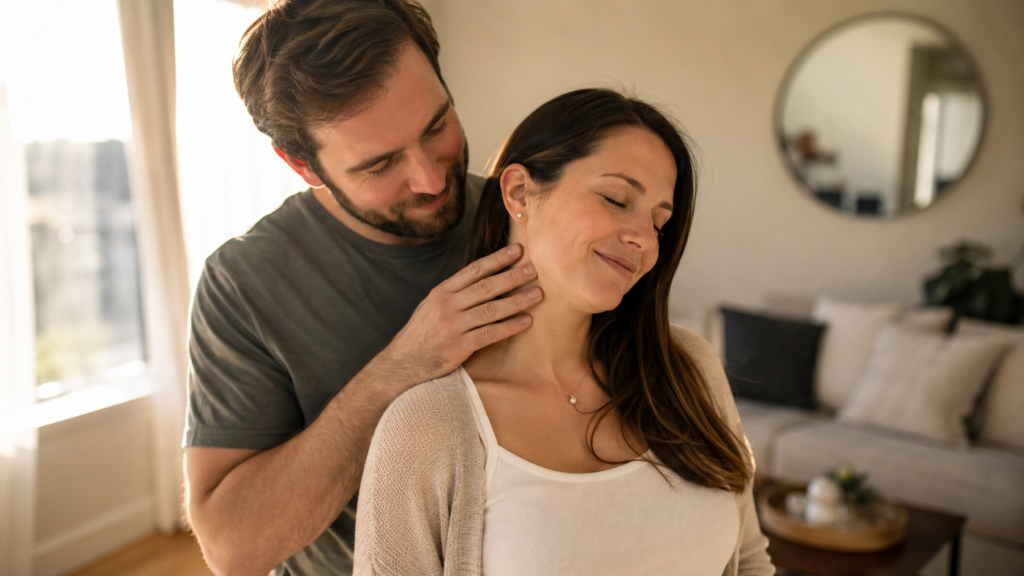
None of these are exotic. That is rather the point. Every one of them is somewhere you already have access to and probably ignore.
- The nape of the neck. Kissed slowly along the hairline, not pecked. For a lot of wives this is the single most responsive spot on the list.
- The back and sides of the neck. Related but distinct. Slow, warm, unhurried.
- The shoulders and along the spine. Deep, slow massage rather than light tickling. This one doubles as genuine stress relief, which is not a small thing.
- The small of the back and the tailbone. Gentle caressing in the hollow just above the tailbone.
- The inside of the arms. From the inner elbow down toward the wrist. Barely-there pressure works better than firm.
- The wrists. Thin skin, close nerves, almost never touched deliberately.
- The inner thighs. Most couples treat this as a corridor to somewhere else. Stop there instead.
- The perineum. The soft area between the genitals and the anus. See the section below, because on him this one is a genuine discovery for most wives.
- The earlobes. Nibbled, sucked, or breathed on. Also one of the easiest to overdo, so watch the response.
- The fingers. Gently tugged, sucked, or laced through yours with real attention.
- The scalp. Fingers through the hair, slowly. Nearly everybody likes this and nearly nobody asks for it.
- The backs of the knees. Odd, ticklish for some, surprisingly good for others. Worth finding out which one your spouse is.
If you want somewhere to practice all of this without any pressure attached, our guide to foreplay all day long is built around exactly that idea.
Men and Women Do Not Rate These the Same
Researchers (Turnbull et al., 2014) mapped the erogenous zones of hundreds of men and women, and what they found is genuinely useful.
Our pleasure maps are remarkably similar overall, with roughly a 90% correlation between the sexes. So this is not a case of men and women being built differently. But within that similarity there are some real gaps in intensity, and those gaps are where couples go wrong.
| Body part | Female rating | Male rating | Difference |
|---|---|---|---|
| Nape of the neck | 7.5 | 5.7 | 33% higher in women |
| Breasts / chest | 7.4 | 4.1 | 78% higher in women |
| Nipples | 7.4 | 4.9 | 50% higher in women |
| Back of the neck | 6.2 | 4.5 | 37% higher in women |
| Perineum | Lower | Higher | Significantly higher in men |
Look at the neck rows. Women rated the nape 7.5 against the men’s 5.7, and the back of the neck 6.2 against 4.5. A great many husbands treat the neck as a stop on the way somewhere. For a lot of wives it is not a stop, it is a destination.
The chest rows are the widest gap on the table. Women rated the breasts and chest 7.4 where men rated the same area 4.1, which is close to double. If you have ever wondered why something that does very little for you does a great deal for her, that row is the answer.
And men have their own hotspot that women often overlook as well: the perineum, that sensitive area between the scrotum and anus.
Tip for the husbands
Slow down and spend real time on her neck. Not a quick kiss, but a gentle, lingering touch along the nape and the back of her neck. Let your fingers slowly trace these areas during foreplay. Do not rush or overlook these “secondary” zones, because the research suggests they may not be secondary at all for her. But ask her what she thinks!
While you are paying attention there, our guide to breast and nipple stimulation covers the other zone on that table she is likely to rate higher than you would guess.
Tip for the wives
That spot between his testicles and anus? It is packed with nerve endings and responds to gentle pressure and massage. Most women have never explored this area, but it could be a game-changer for his pleasure.
The other spot worth knowing about is the frenulum, on the underside of the penis. Between that, the perineum, and what our guide to manual stimulation covers, there is a lot more available than most couples ever get to.
How to Actually Do This Tonight
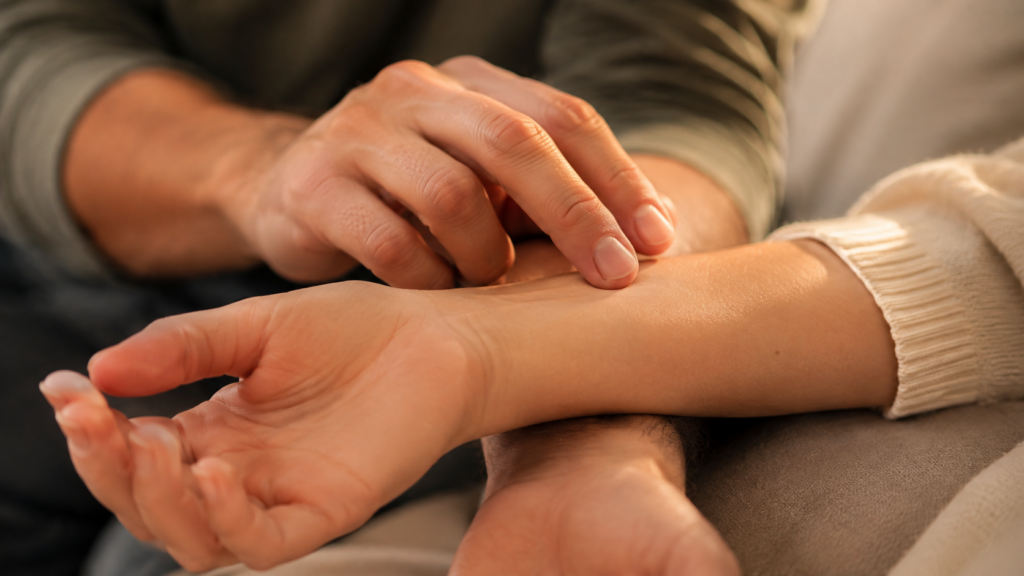
Here is the assignment, and it takes five minutes.
Before you go anywhere near the obvious zones, spend five minutes on the overlooked ones. Touch with curiosity rather than urgency. Ask what feels good. Pay attention to what your spouse does rather than what you expected them to do.
Two things that make the difference between this working and not working:
- Go slower than feels natural. These zones do not announce themselves the way the primary ones do. If you are moving at your usual pace you will pass over them without either of you noticing anything.
- Ask, out loud. “Do you like that?” is not a mood-killer. Guessing for fifteen years is. If talking during sex feels awkward for the two of you, our guide to sexual communication in marriage is where to start.
By the time the secondary zones are awakened, the primary zones will be that much more ready for your loving touch. That is the whole mechanism. You are not replacing anything, you are preheating.
The same principle applies after sex too. Slow, unhurried touch during the afterglow does its own work. And if you want to take the scenic route all the way, a yoni massage or lingam massage is built entirely on it.
The Bigger Idea
I am convinced that our whole bodies are designed for pleasure and connection, not limited to just a few narrow areas. When couples take time to enjoy and awaken these zones, their arousal, delight, and connection improves as well.
So: what is one area you have never really focused on before? Try it tonight.
Erogenous Zones: Common Questions
There is no fixed number. Beyond the primary hotspots of the genitals, breasts and anus, the body has hundreds of areas that can become arousing once they are awakened. Which ones work varies from person to person, which is why exploring together beats following a list.
The nape and back of the neck, the shoulders and spine, the small of the back, the inside of the arms and wrists, the inner thighs, the perineum, the earlobes, the fingers, the scalp and the backs of the knees. Most couples move past all of these on the way to somewhere else.
Mostly the same zones, but rated with different intensity. Turnbull and colleagues found roughly a 90 percent correlation between the sexes overall. Women rated the nape of the neck 7.5 against 5.7 for men, the back of the neck 6.2 against 4.5, the breasts and chest 7.4 against 4.1, and the nipples 7.4 against 4.9. The perineum runs the other way and rates significantly higher for men.
The perineum is the soft area between the genitals and the anus. On men it is a distinctive hotspot, packed with nerve endings and responsive to gentle pressure and massage. Most wives have never explored it, which makes it one of the more available discoveries in a long marriage.
Five minutes of deliberate attention before touching the obvious areas is enough to notice a difference. The point is not the clock, it is going slower than feels natural, because these zones do not announce themselves the way the primary ones do.
Completely normal. Context does much of the work. The same touch on the same spot can be arousing one evening and irritating the next depending on stress, mood and what is happening between the two of you. This is why asking beats assuming.
Reference
Turnbull, O. H., Lovett, V. E., Chaldecott, J., & Lucas, M. D. (2014). Reports of intimate touch: Erogenous zones and somatosensory cortical organization. Cortex, 53, 146–154. doi:10.1016/j.cortex.2013.07.010
Want a whole library of ideas for exploring together? The Intimately Us app is full of them.