

Afterglow is the warm, contented feeling that lingers after sex — the calm, the closeness, and the sense of wellbeing that stay with you once the physical part is over. In a relationship, the word describes the emotional bond that carries forward afterwards, not just the flushed look of the skin. Researchers have measured it, and found it can last up to 48 hours.
Below: what the word means, where it came from, what the science actually says, and how to make yours last longer.
What Does Afterglow Mean?
In everyday use, afterglow means the good feelings that remain after a pleasurable or successful experience. The Oxford dictionary gives a second, older meaning too: the light or radiance left in the sky after the sun has set. Both senses are still in use, which is why the word can be confusing.
Afterglow meaning in love or in a relationship: the lingering closeness, affection and contentment a couple feels in the hours after being intimate. It is emotional as much as physical — a sense of being bonded, safe and unhurried with each other.
Afterglow meaning sexually: specifically the period right after sex, associated with the calm and bliss that follow orgasm. It can also describe the physical signs — flushed skin, relaxed body, heavy limbs.
On this page I use the word in the fullest sense: everything that happens in your body and in your relationship in the window right after sex.

Where the Word Comes From
My mom and I discovered we had completely different definitions of this word.

Anyone who knows me knows that I love Taylor Swift. Like, a lot. When her album Lover came out I excitedly listened to every song. Driving around with my mom later that week, I asked if I could play her one of my favorites. “It’s called Afterglow!” My mom gave me a very strange look. “Manda. Afterglow means sex!” Now it was my turn to look shaken. “What?! Afterglow means sex?!”
We discovered that day that the term applies to a lot of different scenarios. Poets and lyricists have leaned on both meanings for a long time — the light after sunset and the feeling after joy — to carry romance and nostalgia. Taylor Swift used it to ask a partner to forgive her after a fight and come back to the good feeling as the sun goes down. Somewhere along the way, the hours after sex borrowed the same word, and it stuck.
Is the Afterglow Real? What the Science Says
Yes. It is not just a poetic idea. Afterglow shows up in research both as a measurable rise in self-reported positive emotion and as increased activation of dopamine and oxytocin receptors — the same chemistry involved in bonding and reward.

How long does the afterglow last? Up to about 48 hours. In a study published in Psychological Science in 2017, Andrea Meltzer and colleagues followed two groups of newlywed couples — 96 couples in one study and 118 in another — who kept daily diaries for two weeks. Couples reported elevated sexual satisfaction for roughly two days after sex, which the researchers called the sexual afterglow.
The more interesting finding is what it predicted. Partners with a stronger afterglow — those still reporting higher sexual satisfaction 48 hours later — reported higher relationship satisfaction four to six months on. That held after accounting for how often couples had sex, personality, and how long they had been together. In other words, the lingering matters on its own, separately from the frequency. You can read the summary of the research from the Association for Psychological Science.
A second study points at something more directly useful: how long you stay affectionate afterwards matters on its own. Amy Muise, Elaine Giang and Emily Impett, writing in Archives of Sexual Behavior in 2014, ran two studies — one of 335 people in relationships, the other following 101 couples over three months. The longer post-sex affection lasted, the higher both sexual and relationship satisfaction were, and the effect was still visible at the three-month follow-up. Longer is stronger.
One part of that finding is worth naming plainly, because it explains a lot of quiet friction in marriages: the link between lingering and satisfaction was stronger for women than for men. In the second study, women — but not men — felt more sexually satisfied when their partner offered higher-quality affection afterwards. So if this matters more to one of you than the other, that is not neediness or a character flaw. It is one of the more consistent findings in the research.
How to Make the Afterglow Last
If the afterglow does its own quiet work on a marriage, it is worth protecting. These are the things my husband and I have found actually help — none of them require much time.

Leave time for it
Life gets busy and spending the whole day in bed is rarely practical. But if you finish and immediately jump back into your separate to-do lists, you lose most of the benefit. Even ten minutes of staying put lets those feelings settle in. Ten minutes is the whole ask.
Keep the touch going
- Stay close. If it is comfortable, stay physically connected after intercourse rather than separating straight away.
- Offer a massage, or if you are both spent, just stroke each other. Touch the parts of them you love. Some people love being lightly scratched.
- Snuggle. Snuggling on its own is good for connection and mood. During the afterglow it compounds.
- Skin on skin. Staying naked together has real benefits for brain chemistry and closeness. If that is hard because of body-image worries, this is a safe moment to say so out loud and ask your spouse how they see you. Keep a soft blanket nearby if you get cold.
- Clean each other up. My husband tells me it makes him feel cared for — that I still want him after the sex, when he is worn out and has nothing left to perform with. He never asked for it. It has become one of our better moments. (Shared with his permission.)
- Shower together. Sex is messy. Washing each other keeps the connection going while you ease back toward real life — and if you want to make more of it, our guide to shower sex has ideas.
Stay emotionally connected

- Look at each other. Even if it feels silly at first, hold your spouse’s gaze. Think about who they actually are and what you love about them, and then tell them what you are thinking.
- Talk about nothing important. This is not the moment for logistics or lists. Talk about what you love, what you liked about what just happened, or something you would find harder to admit anywhere else. If talking about sex is difficult for the two of you generally, our guide to sexual communication in marriage is the place to start.
- Be yourselves. Do not perform this — not like the movies, not like what you assume should happen, not even like me. Be silly if you are silly. Crack jokes, nap, whisper. Whatever is actually you.
- Phones are up to you. Some couples find them a distraction. My husband and I scroll funny videos together and laugh, and that works for us. The test is simply whether the phone is being used for connection or instead of it.
When One of You Wants to Get Up and the Other Wants to Stay
This is the part most articles skip, and it is the reason afterglow becomes a sore subject in a lot of marriages. One spouse is wired to linger. The other is asleep in ninety seconds, or already thinking about the alarm.

Neither of those is a character flaw, and it is worth saying plainly that falling asleep afterwards is a physiological response, not a verdict on the relationship. But it does leave one person feeling dropped, and that feeling accumulates.
A few things help. Say what you want before, not after — “can we stay in bed for a bit afterwards?” lands very differently than disappointment once it has already happened. Agree on a small, specific minimum you can both live with, the way you might agree on anything else; ten minutes of staying put is easier to commit to than an open-ended expectation. And if you are the one who fades fast, a few seconds of deliberate contact before you go — a longer kiss, a hand that stays where it is — carries more weight than you would think.
If this keeps surfacing, it is usually not really about the afterglow. It tends to be the same difference in how each of you experiences desire, showing up at a different point in the evening. Our guide to responsive and spontaneous desire covers what is underneath it.
Afterglow: Common Questions
Afterglow means the good feelings that remain after a pleasurable experience. In a relationship it refers to the warmth, closeness and contentment that linger in the hours after sex. The word also has an older meaning: the light left in the sky after sunset.
It describes the lingering emotional closeness a couple feels after being intimate: feeling bonded, calm, unhurried and secure with each other. It is more about the emotional connection that carries forward than about anything physical.
Up to about 48 hours. A 2017 study in Psychological Science followed newlywed couples keeping daily diaries and found sexual satisfaction stayed elevated for roughly two days after sex.
It is real and measurable. It shows up as a rise in self-reported positive emotion and as increased activation of dopamine and oxytocin receptors, the same chemistry involved in bonding and reward.
Research suggests it does. Partners who still reported higher sexual satisfaction 48 hours after sex reported higher relationship satisfaction four to six months later, even after accounting for how often they had sex, their personalities and how long they had been together.
Research says yes. A 2014 study in Archives of Sexual Behavior found that the longer post-sex affection lasted, the higher both sexual and relationship satisfaction were, with the effect still measurable three months later. The link was stronger for women than for men.
Falling asleep afterwards is a physiological response, not a statement about the relationship. It helps to ask for what you want beforehand rather than being disappointed afterwards, to agree on a short specific minimum such as ten minutes of staying close, and for the one who fades fast to make a few seconds of deliberate contact before drifting off.
The Bottom Line
The afterglow is real, it is measurable, and the research suggests the couples who let it linger are quietly doing their marriage a favor. It costs ten minutes. Of everything on this site, it may be the highest return on the smallest effort.
I could not have written this one without my husband — both for the help and for being the reason I like the subject so much.
Written by Amanda Severson, LMFT with Get Your Marriage On!
Want more ideas for the moments after — questions to ask, things to say, ways to stay close? The Intimately Us app is full of them.
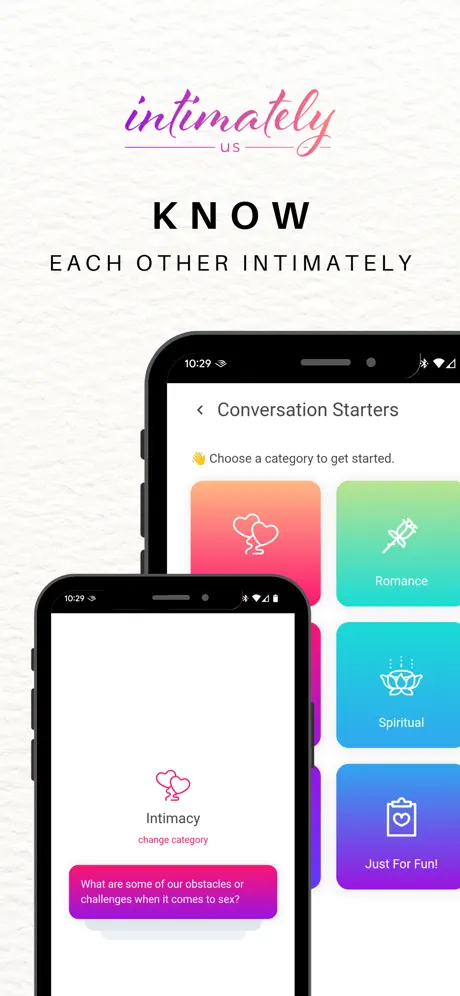
Try this fun & sexy app for your marriage!
Bring back flirty fun, connection, and creativity—without anything crass. Sync with your spouse, play bedroom games, explore new ideas, and deepen intimacy.
Learn more →I love this app! My husband and I are such busy people—this helps us stop and show the love we have for each other. I’d give 6 stars if I could!
This is by far the #1 sex app for Christian couples! We played the games five times last week. Sparks are flying and we’ve never felt so close.